
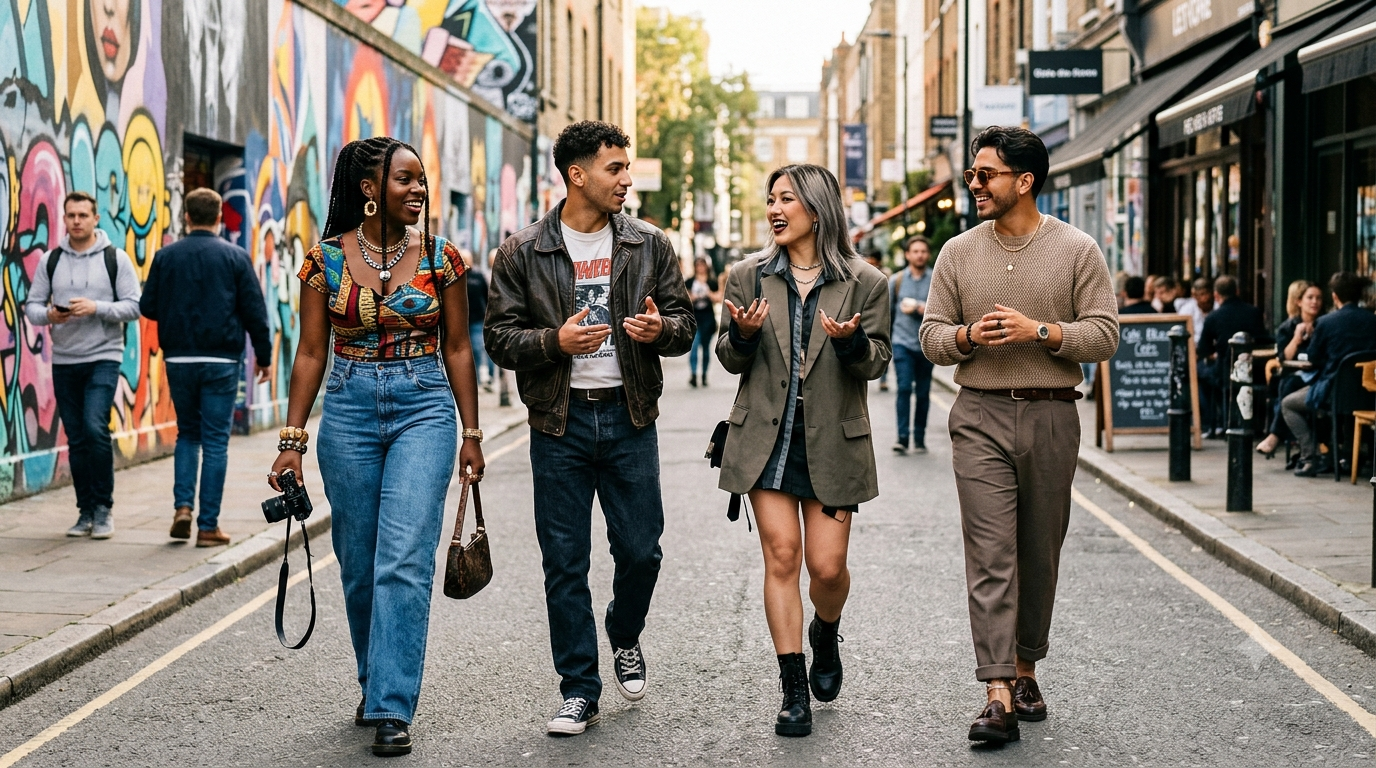
Why Is Fashion Important? All The Reasons Why What We Wear Matters
I’d say that for a good portion of my life, I was on the fence about fashion.
Part of that came from the stories I loved growing up.
Nearly all of my style icons were the bookish heroines of late ’90s and early 2000s movies. They were smart girls who accidentally happened to look beautiful but never seemed interested in beauty itself. Think Hilary Duff in A Cinderella Story—the aspiring writer and dreamer surrounded by shallow, fashion-and beauty-obsessed mean girls and materialistic stepfamily members.
Fashion wasn’t portrayed as something thoughtful or artistic. It was vanity, and it belonged to the villains. That message was everywhere. The “best girl” cared about books. The “mean girl” cared about clothes.
For years, I believed that narrative too. Part of that belief, I’m sure, came from growing up too poor to have the latest trends. It’s a lot easier to convince yourself that fashion doesn’t matter than to admit it’s out of your reach.
It wasn’t until I was older—living on my own, earning disposable income, and no longer feeling guilty for enjoying beautiful things—that I realized I’d misunderstood fashion entirely.
So, as I begin this little corner of the internet devoted to beauty, fashion, and all the other “frivolous” things I find fascinating, I thought the best place to start was with a simple question: why is fashion important?
Let’s dive in, red bottoms first!
Why Is Fashion Important?
There are plenty of reasons, but before answering that question, it’s worth clearing up a common misunderstanding.
Fashion vs Style
People often use fashion and style interchangeably, but they’re actually describing two different things.
Fashion is the broad category. It’s the clothing we wear, the trends of a generation, the garments passed down through families, the handmade sweater your grandmother knitted, or the vintage jacket you rescued from a thrift store.
Style, on the other hand, is deeply personal.
Style is the way an individual selects and arranges those pieces into something uniquely their own. It’s the visual language you use to tell the world who you are before you’ve spoken a single word.
Fashion gives us the materials. Style creates the masterpiece.
Fashion Is Art
When people think of fashion, they often picture The Devil Wears Prada—cutthroat executives pursing their lips over fabrics, luxury brands, and impossible beauty standards.
Sometimes those stereotypes exist. But shallow people exist everywhere. You’ll find them in fashion houses, churches, nonprofits, universities, and corporate boardrooms alike. But instead of judging fashion by its worst representatives, I think it’s more helpful to compare it to another creative field: art.
An art dealer may know how to market a painting. But it’s the artist who gives the painting meaning.
Fashion works much the same way.
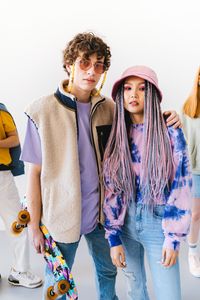
Sure–the fashion industry sells clothing, but the individual transforms those clothes into something meaningful.
Like an artist working with paint that anyone can buy, every one of us has access to the same basic materials—fabric, color, texture, shape. Through personal style, we arrange those materials into something that communicates who we are, what we’ve experienced, what we value, and sometimes even who we’re becoming.
Whether by the fashion designer or the person who styles the design, with intentional hands, clothing becomes wearable art.
Fashion Tells Stories
I can’t deny it; there be some freaks out there in the high fashion world. We’ve all seen the viral TikToks of a skeletal model wearing something akin to a muppet on Flakka.
Another example: Rick Owens’ infamous Spring/Summer 2016 runway show. Models walked the runway with other women strapped onto them, some hanging upside down and others wrapped around their bodies, creating what the internet quickly dubbed the “human backpack” collection.
One model even carried another model upside down, belly-to-belly, with the other model’s booty, precariously positioned under her chin. That’s one bowel movement away from social suicide. Needless to say, the stakes were high.
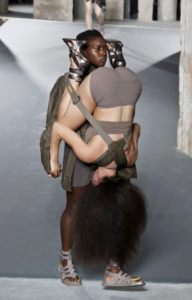
Owens insisted the designs were about women supporting women, motherhood, and caregiving.
Do we believe him?
Eh.
But whether or not our interpretation matches the designer’s intention almost isn’t the point.
The piece invited reflection, and that’s exactly what good art does. Fashion can challenge culture just as powerfully as a painting hanging in a museum.
Fashion Creates Belonging
One of the greatest misconceptions about fashion is that it’s about exclusion (think back to the many mean girls of A Cinderella Story).
In reality, some of our favorite clothing exists because it brings people together. Sports fans proudly wear matching jerseys. Church groups order matching T-shirts for mission trips. Military uniforms create unity. Police officers, firefighters, doctors, and nurses wear clothing that immediately communicates safety, authority, and purpose.
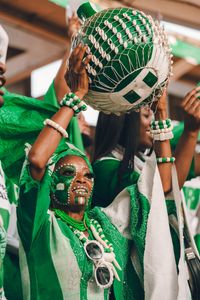
Imagine being hurt and seeing a police officer walk toward you. The officer is a complete stranger. Yet the uniform itself provides comfort before a single word is spoken.
Fashion has the remarkable ability to create belonging long before conversation begins.
Throughout history, people have used clothing to identify their communities, express their values, and recognize one another. The hippies of the 1960s are a perfect example. Loose silhouettes, natural fibers, flowing garments, and earthy colors reflected a generation longing for peace during a time of war. Their clothing wasn’t random. It communicated a worldview.
Being able to make an entire statement or political argument at a glance—that’s pretty powerful.
Fashion Preserves History
One of my favorite things about fashion is that it quietly records history. You can often understand an era simply by looking at how people dressed.
The 1920s flappers whose style, inspired by popular sexual fetishes of the time, reflected the debaucherous nature of the roaring 20s when the economy, and those profiting from it, felt invincible.

Then came the Great Depression.
Suddenly, extravagance disappeared. Hand-me-downs became necessities. Clothing was patched instead of replaced. A humbled nation dressed humbly.
Fashion doesn’t simply tell us what our ancestors wore. It tells us how they felt, their prosperity and hardship, their rebellion and conformity, their hope and grief. Sometimes, the clothes we choose are much like the words we choose: they come from the overflow of our hearts.
Fashion Is Fun
Of course, not every reason as to why fashion is important has to be profound.
Sometimes…it’s just fun.
It’s fun discovering the perfect jacket, saving up for the handbag you’ve admired for months, or finding that pair of shoes that somehow feels like it was made for you. There’s something special about a piece of clothing that feels like an extension of who you are.
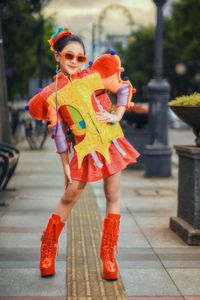
The world can be falling apart. You can feel lost, alone, and completely without hope. And then… you slip into something that makes you feel like a million bucks, and suddenly—BOOM!—the day feels a little more manageable.
The problems haven’t disappeared. Nothing around you has changed. But for a moment, you feel a little less like a failure and a little more like yourself again.
So, Why Is Fashion Important?
Why is fashion important? Because it’s about more than clothing.
The older I’ve gotten, the more I’ve realized that appreciating beautiful things doesn’t make someone shallow. If anything, it reminds us that human beings have always been creators.
We decorate our homes, write stories, paint pictures, and compose music. And sometimes we express ourselves through what we wear.
And that’s what I hope this blog celebrates.
Not blind consumerism, not chasing every trend. But discovering beauty, appreciating craftsmanship, preserving our culture, all while finding the confidence to become our best selves.
Here’s to doing—wearing and becoming—what we love.
Love,
Kolbie